Human Computer Integration Lab
Computer Science Department, University of Chicago
Essays (long-form writings from our lab)
(Back to all essays)Essay #7: What Does a CHI Technical Program Chair Actually Do? by Prof. Pedro Lopes
July 2026
A personal reflection on serving as Technical Program Chair for ACM CHI 2026
After CHI 2026, I posted an invitation on social media: ask me anything about what it was like to serve as Technical Program Chair. Three questions dominated: (1) what does the TPC actually do, (2) how much work is it, and (3) did it go well? This is my answer, not as an official statement as TPC, but as a personal reflection on a rewarding, kind of exhausting, and humbling volunteer role.
CHI 2026 was an especially interesting year to do this. It was held in Barcelona and launched a refactored format decided by the Steering Committee before the TPCs were assigned: papers in the morning, interactive and extended-program tracks in the afternoon, and a simplified set of submission tracks. The job was not only to help run a large conference; it was to help run it while it was changing.
(1) “What does a TPC actually do?” (and some misconceptions about TPC)
The shortest definition is that the Technical Program Chairs (TPC) are an interface between the General Chairs and the individual tracks that make up the technical program.
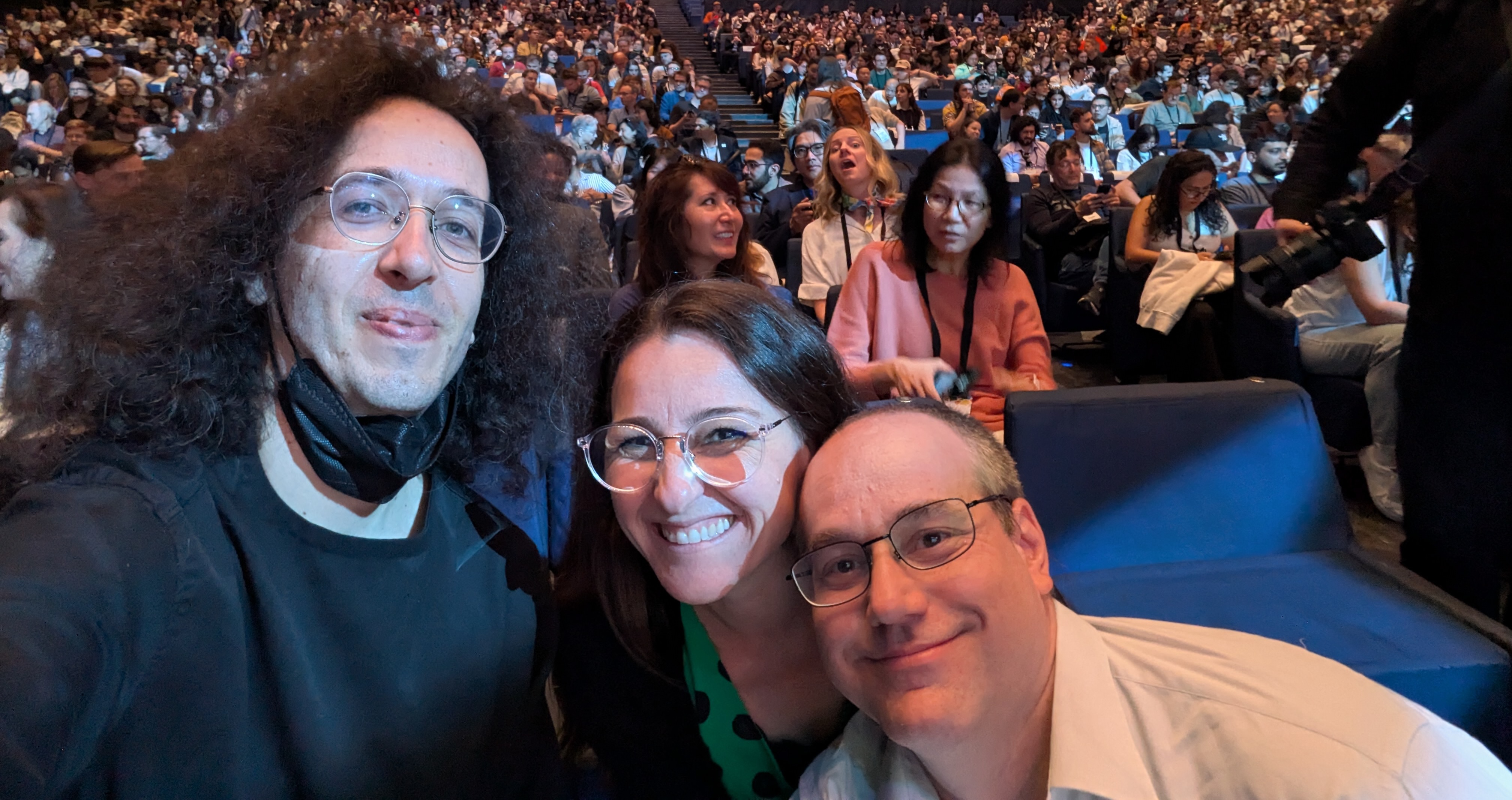
The first misconception is that the “TPC handles the papers”—so many people thought that’s what we did. I understand the confusion because, in many conferences, the title of technical program chair is essentially synonymous with paper chair (e.g., DIS 2026 calls their paper chairs “Technical Program Chairs”, or UIST 2026 calls them “Program Chairs”). At CHI, papers are enormously important, but they are still only one track inside a much larger program. Thus, CHI has dedicated “Paper Chairs” to handle paper review. Other tracks (posters, demos, panels, workshops, Meet-Ups, journals, student mentoring, and more) have their own chairs, deadlines, constraints, publication needs, room needs, and emergencies. At CHI, the TPCs do not replace any of these chairs; they support them, coordinate across them, and help turn accepted content into an actual conference program.
Another misconception is that the technical program is “a list of accepted submissions”. Not quite, a program is a schedule, set of rooms, authors’ constraints, presentation formats, a publication pipeline, the SIGCHI app backend, accessibility and AV requirements, and many small decisions that need to line up. CHI 2026 had 1,702 papers, 792 posters, 8 panels, 67 demos, 69 workshops, 31 meetups, 40 students in dissertation research roundtables, 100 students in the wider student mentoring program, 12 teams in the student research competition. All these accepted submissions need sessions; sessions need rooms; rooms have capacities; authors cannot be in two sessions at once; some tracks have different formats. A surprisingly large part of the role is data processing and deadline choreography. Accepted content has to become structured data: session titles, rooms, times, authors, presentation modes, affiliations, track labels, and many links (youtube, DOIs, etc). Every track also has deadlines, and a delay in one place can affect the app, the ACM Digital Library, room assignments, presenter instructions, and attendee communication. A conference like CHI is made of tiny dependencies: you pull one thread and five others move.
Another way I think TPCs role could be defined is as a sounding board for all tracks. Track chairs may have questions about CHI policies, peer review, accessibility, room needs, publication issues, conflicts, systems, or difficult conversations with authors. Sometimes they need a quick answer; sometimes they need help escalating. TPCs also take responsibility when needed: explaining or defending decisions, stepping into uncomfortable power imbalances, and absorbing some heat so track chairs do not have to carry it alone.
In the first day of the conference, I got this comment a lot: “you must be relieved that the work is done”. This is the third misconception about the TPC role. Indeed, most of the work precedes the conference, but it does not stop there. During the conference, the TPCs role is to put out fires: missing videos or PDFs that were “stuck” in the ACM DL’s batch processing, room rebalancing for popular sessions, last-minute presenter issues, SIGCHI app corrections, and quick decisions for track chairs or authors. While it was stressful and the typically TPCs spend 90% of their CHI in the chair’s rooms dealing with these emergencies with the help of the General Chairs and Executive Events (a professional company that helps us to run CHI), I also found it rewarding: during the two years leading to the conference, CHI was this abstract idea that we all worked towards, while during the conference it became a living thing—I’m of the opinion that living things need care and that we enjoy giving them care.
“(2) How much work is it?”
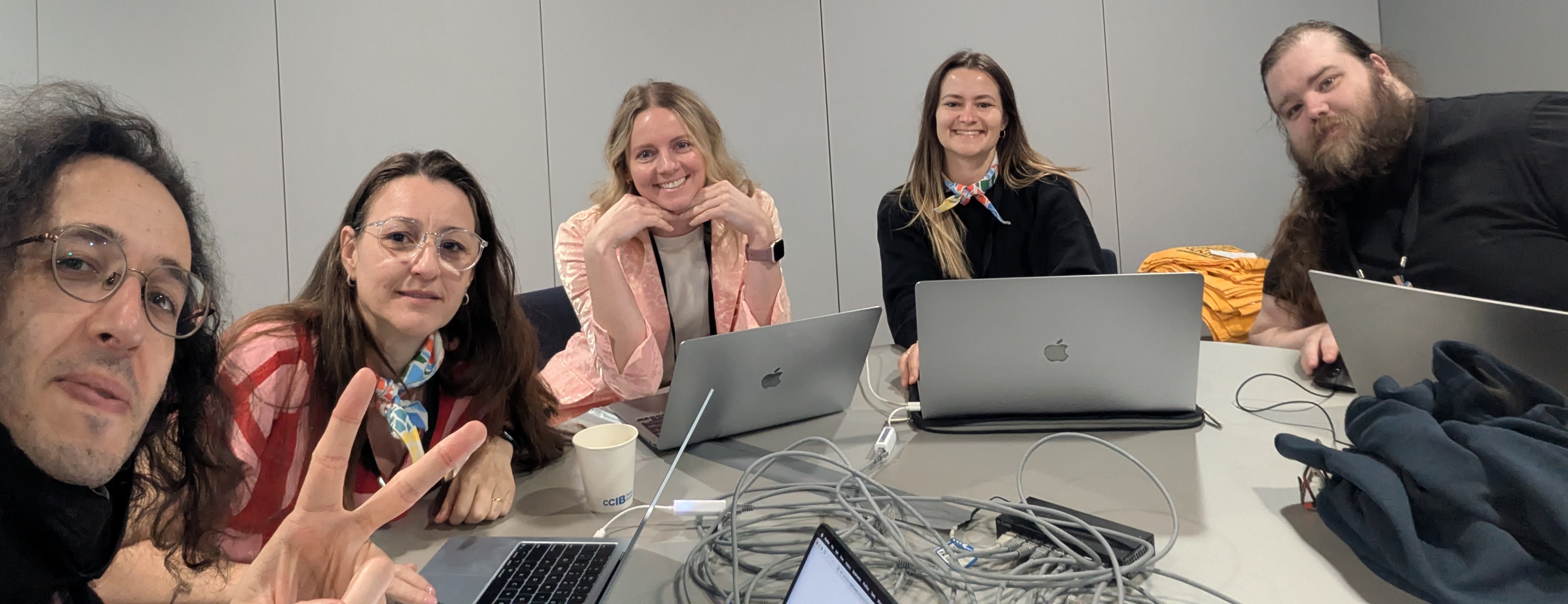
I cannot calculate exactly how many hours I or any of my co-chairs worked on this. At the beginning, between CHI 2024 to CHI 2025, it was two meetings a week plus a few hours of slack/emails, and lots of spreadsheet work. After CHI 2025, it increased. Near the peak, around building and launching the program, it became about four hours a day for me, sometimes more, spilling into some weekends. It is also worth noting that TPC teams specialize: some people carry more backend, scheduling, publication, email, or track-chair support work, which means that the individual chairs had peaks of work at slightly different times.
One way to give others a sense of how much time was it for me, is to track indirect artifacts that I produced along the way to producing the conference program. I was able to track down 1574 emails I personally sent to the TPC inbox, 1668 lines of code that I wrote to transform data, and dozens of large spreadsheets (funny story: one spreadsheet we created together was so big that we found Google Sheets has a limit to what it will render.) Multiply this by three co-chairs and four assistants to get a sense of the size of the TPC’s data backend.
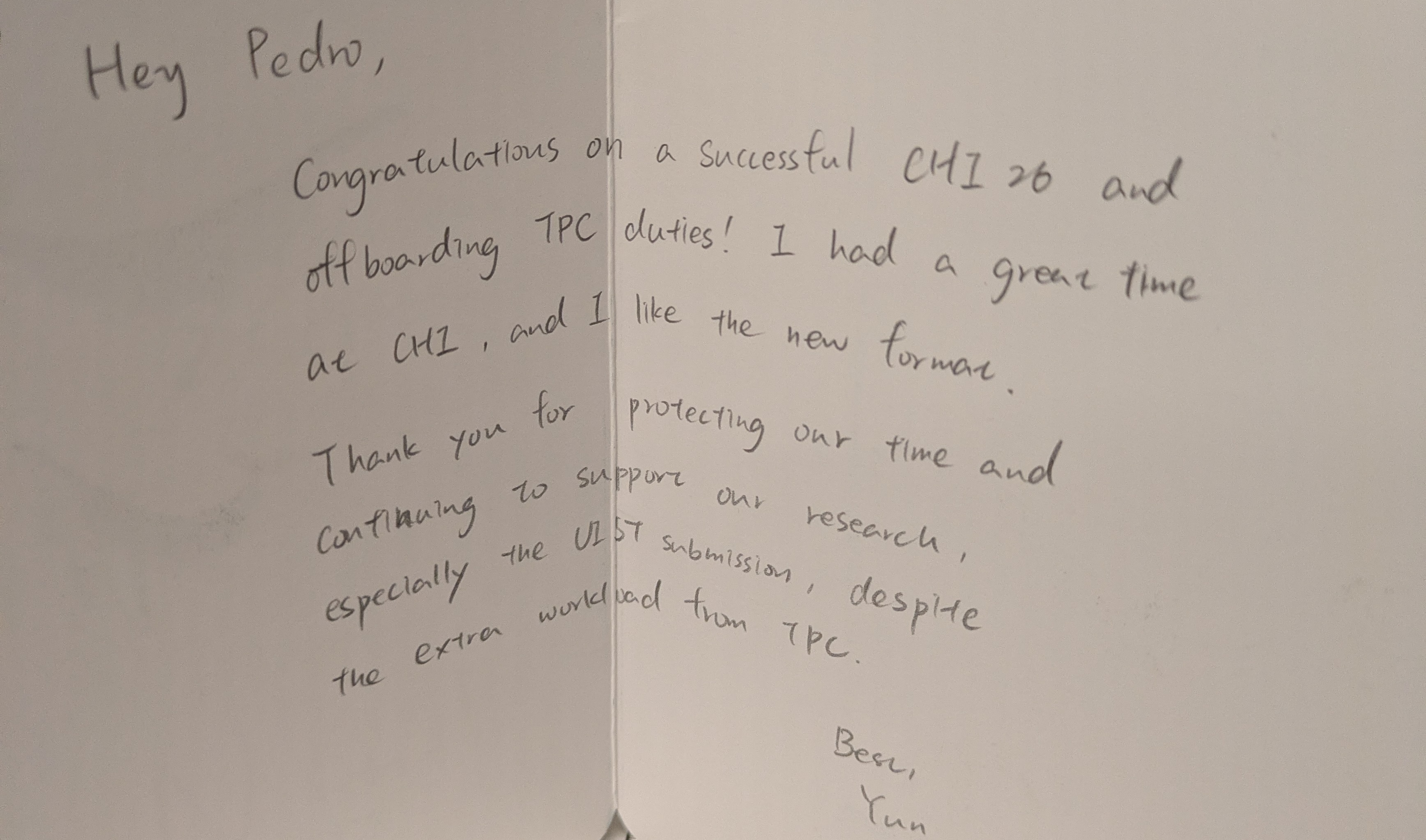
At its peak, it felt like a full-time job layered on top of my full-time job. I did not stop teaching, research, or advising students, but the work had to go somewhere, often into the margin that normally holds the rest of life together. I think one moment captured the cost better than any hour count. After CHI, my PhD student Yun Ho gave me a card saying, essentially: “Thank you for protecting our time (…) despite the extra load from TPC”. That meant a lot and I think that’s the most challenging part of the TPC role, i.e., it will affect the TPC’s research time a lot (negatively).
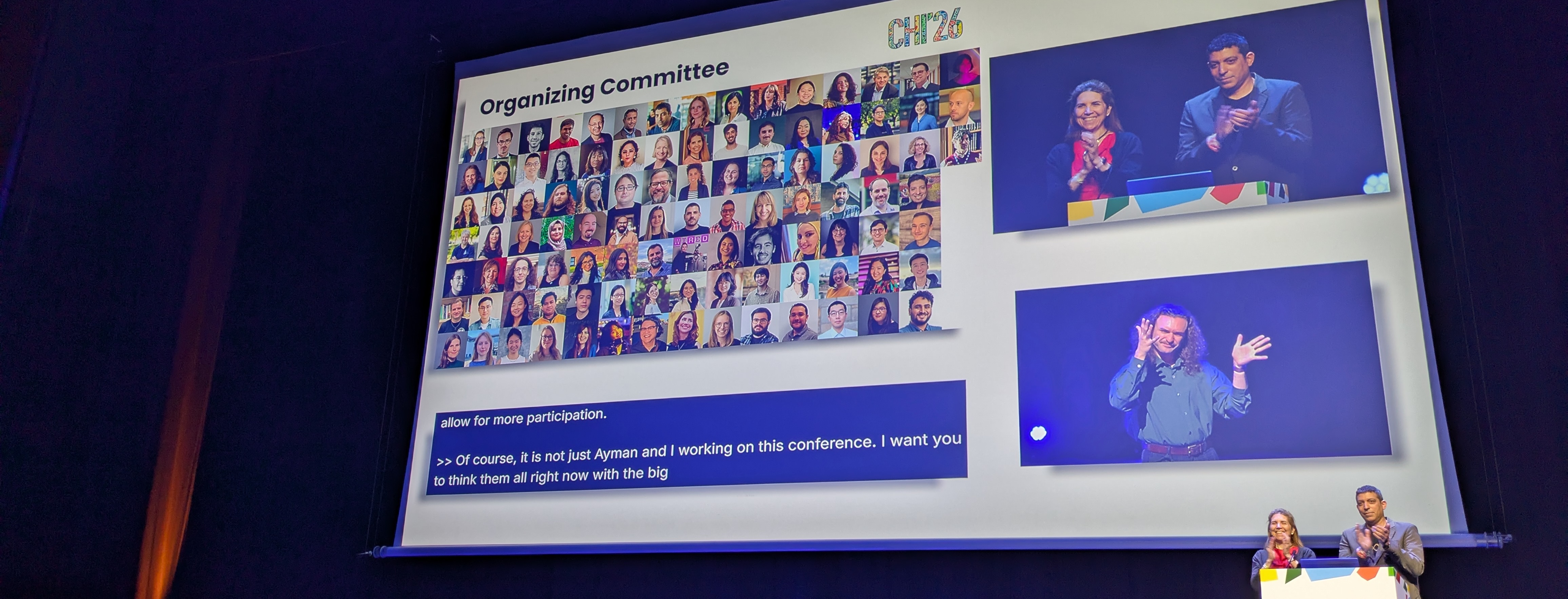
Does that mean no one should do this? No, quite the contrary. Volunteer work is what makes the HCI community function. Every CHI conference only happened because many people did invisible work on top of normal professional and personal lives. Without volunteers, there is no CHI to attend. Consider becoming one and consider thanking the volunteers more (especially those that do much more invisible work than the TPC—we got to be on stage twice and we were quite visible but 100+ people were working as much in the background, such as the steering committee, your favorite track chairs, publication chairs, student volunteers, etc).
“(3) Did it go well?”
From the conference perspective, I think yes: the sessions were strong, the interactive parts had energy, and the community showed up (the biggest CHI to date!).
Personally, the answer is more complicated. You enter a role like this with ideas about what CHI could become. Then you realize that many good ideas do not fail because they are bad; they fail because there is no time to implement them while running a conference of this scale. I am proud of what we did. But it was not exactly the CHI I would design from scratch. It was the CHI our group, constraints, and moment made possible. This is not a disappointment in any way; it is the nature of teamwork.
Finally, serving as TPC changed how I see CHI and I’m excited to see the next editions from this perspective. I now see the layers underneath: decisions behind the schedule, people behind the emails, compromises everyone was forced to do, and the coordination required to make a huge conference feel simple and intellectually stimulating for the attendees.
Thank you to my co-TPCs, Heloisa Candello and Pablo Cesar; to the General Chairs, Nuria Oliver and David (Ayman) Shamma; to our assistants Alexandra Kitson, Xiang Li, Maximiliane Windl, and Jas Brooks; to the many track chairs and volunteers; and to everyone who helped make CHI 2026 possible, from the steering committee to SIGCHI (a longer thanks from the TPC can be found in the CHI 2026 Front Matter) .
For more behind the scenes, see How Does CHI Happen? (from CHI 2022 when our General Chair Ayman was TPC!), the CHI Steering Committee site, and the CHI 2026 Technical Program FAQ.
Final note: this was piublished originally at the SIGCHI newsletter "voices of CHI". Read the original version published in the ACM DL.